Tuesday, March 19, 2024

Since My Last Post


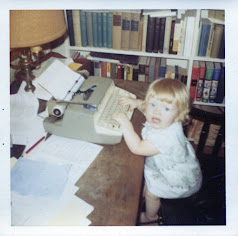
Carl Anderson (rt), his son Axel (lt), his grandson Gilbert (standing), and great-grandson.

Since my last post, I've spent a good deal of my genealogy time transcribing an interview that my great-uncle, Axel Anderson, recorded with my great-grandfather, Carl Johan Anderson, in 1955.

For some reason, a post about the information from the recording just would not come together, but it is the 19th of the month, I really want to stick to a minimum of two posts per month, so I thought I would write about what I've been up to.

One of the challenges posed by the Anderson recording was language. Carl was born in Sweden and there were some words and phrases, mostly names and place names, that I could not make out. There is also a thirty second exchange between Axel and Carl in Swedish. The Genealogical Translations group on Facebook really delivered for me here. A volunteer provided the missing words and names for me and also transcribed the Swedish segment with a translation, all within about 24-hours of my post.

In the past, I have also received translation help from one of the Random Acts of Genealogical Kindness groups on Facebook, but that was for a quick translation of a headstone. This was a little more complicated, so I wanted to go to a group just for translations. I could see after I was accepted to this private group that all of the posts were asking for help with written translations, so I wanted to make my request as easy as possible. The recording was about an hour and fifteen minutes in two files, and I surely wasn't going to ask anyone to listen to the whole recording. I went through my transcription and made sure that each point where I had questions was notated with a I or II depending on which file the audio was on, and placed a time stamp. I then made the text bold and red for English words and blue for Swedish words. After checking the document one last time, I uploaded it to a new Dropbox folder and moved the .mp3 files into that folder, and then I created a link to the folder which I included in my request in the group. Since I was new to the group, I checked the group's rules before making my post and made sure to follow them. And again, in about 24 hours, I had my translations. It was a great experience.

I also had some questions about some of the content of the interview and I took those to the Swedish Culture & Traditions group. The specifics will be a blog post of their own once I do some additional reading, but I'll just say that this group was again very helpful; I had at least a dozen people offering information very quickly.

As for my Hobbs-Merritt line, I've finally stopped procrastinating on making a locality guide for Somerset County, England. It's such an important tool when you start research in a new area, but I have to admit, I find it a bit tedious to put together. And then there's the temptation to jump down rabbit holes when I find a new resource! But, I am making good progress. And thank goodness I have a template to follow; I haven't made a new guide in a while and I'd be lost without it.

I was only able to catch a few sessions live from RootsTech. I did attend a webinar a few nights ago from Amy Johnson Crow about the new full-text searching feature from FamilySearch. That is a very exciting development! I'm looking forward to more record sets in the future.

And finally, I've been playing around more with my mother's DNA matches on Ancestry since sending in my kit and Donald's kit. I was a little worried about Donald not getting results because he had a little trouble that day working up enough saliva, even with all the little tricks, but all was well. It was my DNA that Ancestry couldn't extract!! Hopefully I'm only a few days away from getting my results from my new sample. Thank goodness the second test was free. In the meantime, I've uploaded Donald's data to MyHeritage and Family Tree DNA and I'll start looking at their tools as soon as I can.

Although I feel like I missed something, I think that's all since my last post. I hope I can find material for another post by the end of the month.

Saturday, February 24, 2024

Hobbs-Merritt Do-Over


I didn't really rely on someone else's tree to give me the names of my great-grandmother's parents, did I?  Did I??? Ugh, I think I did.

I started my first tree on Ancestry in 2008 and now in 2024, I thought that those names, Joseph Elijah Hobbs and Elizabeth Merritt, came from my grandfather's research and writing, but I can't find any evidence to back that up. I could have taken their names from census records, also, but let's just say it's a good thing I was planning to review all the facts on this branch anyway.

It was hard to put myself back in my 2008 shoes and pretend I didn't know Joseph and Elizabeth's names, so I started a new private tree, just for myself, just adding the information I would have had back then. One thing I have going for me is that I know the names of Ada's siblings who also came to the United States after the deaths of their parents. Although there is no record generated in this country, like a census record, that contains all of their names in one place, the relationships are documented through family stories, obituaries and those newspaper accounts that you don't see anymore, like one that mentioned my great-grandmother travelling out of town for her sister's funeral. This gives me confidence that the hint Ancestry gave me for the UK 1861 Census is correct. It contains my great-grandmother's name and those of her known siblings, along with those of their parents.

It also, very helpfully, confirms that my great-grandmother was born in Poplar in London's East End, which fans of "Call the Midwife" may recognize. This is important because Ada was the only child of this family, that I know of, to be born outside of the county of Somerset. And not a short distance either but well over one hundred miles. That's a considerable distance in 1855.

It also means that I haven't yet found Ada's baptismal record. Not all church registers for Poplar have been digitized according to multiple sources, but now that birth certificates can be ordered and fulfilled online, I was happy to have an excuse to plunk down a few dollars and order my first English certificate.


And there she is. I don't know how I can be so excited about a birth certificate after 14 years of genealogy, but, knowing it would be ready yesterday, I looked for the email from the GRO before I even got out of bed. And did I wait the suggested 24 hours to check the site for it? I did not!

I will try to track down Ada's baptism soon, but for now, I am satisfied that I had the correct names for her parents. Elizabeth's maiden name is further confirmed by the fact that her children lived with two of her brothers in the United States and I have those census records.

I don't know why I've been putting off making a locality guide for Somerset, England, but I got a little kick-start from Legacy Family Tree Webinars this week, watching the recent Introduction to County Research in England by Mia Bennett, so that's what I'll be doing next.

Friday, February 16, 2024

52 Ancestors - Heirloom - My great-grandmother's Bible


Researching my paternal grandfather's maternal lines has meant starting over to a greater degree than I realized at first and I've found myself examining everything, including the few heirlooms I have from this branch.

I've shared photos here before of this Bible that belonged to my great-grandmother, Ada Merritt Hobbs, but it's been quite a while since I've examined it. Probably since I photographed it in 2015. The inscription reads:

Ada Hobbs
Elm
November 1867
E.M.H.

Looking at it again, I realized that this inscription was likely made by Ada's mother, my 2nd great-grandmother, Elizabeth Merritt.

Elm is a town in the county of Somerset in England. Baptismal records show, I believe, that at least two generations of Hobbs lived in Elm for at least part of their lives. Ada would have been twelve in November of 1867, so I wonder if this was a gift for her Confirmation. Although it seems a bit formal to me for a mother to inscribe her daughter's Bible with her initials (E.M.H. for Elizabeth Merritt Hobbs), I can't really say what the custom would have been 150 years ago.

This Bible must have been very special to my great-grandmother, especially since she lost both of her parents the following year and had to leave England not long after to join her siblings in Pennsylvania.


My grandfather was 18 when his mother died, I believe that a lot of Ada's possessions naturally went to her older children, but I'm very glad that this Bible found it's way to those musty book shelves in my dad's house and eventually to me. And I highly recommend examining your treasures every so often. You never know what might "click" after more research.

Wednesday, February 7, 2024

52 Ancestors - Earning A Living


In 2017 PBS and BBC aired a short reality series called "Victorian Slum House." Despite the title, it was a fascinating recreation of life in London's East End. Each family group that participated was faced with different challenges and viewers had the opportunity to see some of the ways that semi-skilled and unskilled laborers earned a living in the Victorian era; how much they made, how the families lived and what could happen when they were faced with various obstacles.

If you've never seen this series and are in the US, you can still watch the five episodes with a membership to PBS Passport, it looks like they will be available until May and each one is just under an hour.

When I first started researching my family it was enough for me to know that my 2nd great-grandfather, Joseph Elijah Hobbs of Somerset, England, was an edge tool maker and that my 3rd great-grandmother on another branch, Elizabeth Louden, was a straw bonnet maker. I've been able to find a pretty detailed description of how Elizabeth would have made her straw bonnets and a less detailed description of edge tool making, but now I want more detail.

How many days a week did they work? How many hours per day? Did Joseph work for himself, a local smith, a larger factory? Was it noisy, hot and smelly? What kind of income did he earn? What kind of home could the family afford? Did Elizabeth make the bonnets at home? Was it enough to support herself and her three children after emigrating to Canada from Scotland? Did she work around the clock? Did she sell her bonnets directly to her customers, or was she doing piece-work for a local milliner, or was there some other arrangement? Who were her customers?

This type of research is new to me and Google hasn't given me much. Since Joseph Hobbs is in one of the lines that I've already committed to researching this year, I'm starting with a locality guide for Somerset and hoping that this will give me some leads. Once I get into that, I plan to make inquiries at local libraries and archives to see if anyone there can point me in the right direction. I think there are trade directories that I can look for?

Anyway, that is the plan for now, it may change as I learn more, and as I learn, I will share my outcomes with you.

Image from: The New York Public Library. "New England bonnet makers" The New York Public Library Digital Collections. 1866. https://digitalcollections.nypl.org/items/510d47e1-20ce-a3d9-e040-e00a18064a99

Friday, January 19, 2024

52 Ancestors - Witness to History


If the last few years have taught us anything, it's that your name doesn't have to make it into a Wikipedia article for historical events to have a great impact on your life. The same obviously applies to our ancestors and will apply to our descendants. Anyone who has spent any amount of time on this planet, has been a witness to history.

In some cases we may have heard stories and anecdotes about those impacts, like my grandmother's choice of wedding dress in the midst of the Great Depression, or my mother's first trip to the butcher after the end of WWII rationing. Maybe they were a little bit closer to events, like my grandfather who worked at the University of Chicago in the 1940s and rode "the night train to Washington" with Enrico Fermi and others on "matters of a secret nature" during the Manhattan Project.

One of the reasons I've decided to research my paternal grandfather's maternal lines this year is to see if I really do descend, as I was told by another Ancestry member years ago, from Sir Edward Bayntun, Vice Chamberlain to Anne Boleyn, Jane Seymour, Anne of Cleaves, Katherine Howard and Catherine Parr and close friend of Catherine of Aragon. It's not the royal connection that intrigues me so much, but the history. And if there's a historical period that is well researched, it's the reign of Henry VIII.

If Ancestry hadn't shown me my 2nd great-grandfather's bounty application, I likely would never have heard of the Fenian Raids, much less understood the anxiety they provoked in many people living close to the border, possibly including my ancestors. If I hadn't read some of the horrifying details of the Great Famine, I never would have understood the lives, the trauma and even the bequests of some of Donald's immigrant Irish ancestors.

The grinding poverty that pushed my great-grandfather Anderson to come to America was certainly the result of his father's death, but did Sweden's last famine, in the year that he was born, also have an impact? I may never know, but learning about it may still give me some context for the lives of his family. 

I've become quite passionate about digging into the history that my ancestors lived through, the events that shaped them, perhaps even fascinated them as well. I've been keeping my public library busy, my bookshelves full and my podcast queue is never-ending. And just like I'll never run out of ancestors to research, I'll never finish placing them in history.

Tuesday, January 2, 2024

52 Ancestors - Family Lore


Before I started researching my family, I accepted family lore as fact. If my maternal grandmother said our Scottish ancestors were members of Clan Campbell, then they were, if my paternal grandfather said his parents were Welsh, then they were and if my maternal grandfather's father said his proof of Mayflower ancestry was lost when he emigrated from New Jersey to Canada, then it was.

With fifteen years of genealogical research under my belt, of course, I am now a little more skeptical of these claims. I do believe that most family lore contains at least a kernel of truth, but any story passed down through generations of ancestors has the potential to become distorted like the results of an epic game of telephone.

I still don't know if my Scottish ancestors aligned themselves with the Campbells and I'm not even sure how you would go about researching that.  I do know now that neither of my grandfather's parents were born in or even very near to Wales and none of their parents appear to have been either. I'm pretty surprised that this turned out to be untrue since my grandfather was very much a straight arrow and he wrote in his story/autobiography that his parents spoke Welsh, but even his own father listed his and his siblings' birthplaces as in England. And the Mayflower claims? Well, I'm not sure what papers the youngest, still single child of the family, with older married siblings would have been entrusted with when emigrating to Canada that would have proven our connection to that ship. If anyone in the family had such proof, my money would have to be on his sister, who was accepted as a Daughter of the American Revolution; proving, to the standards of the day, that she was descended from a minute-man and a private in the militia during the Revolutionary War.

Since it is January 1st as I write this, I guess the next question is whether or not I will try to find evidence of any of these stories in 2024. I'm still not 100% sure which lines I will be researching this coming year. Certainly, I plan to pick up where I left off with finding Donald's Calma ancestors in Italian church records. And I did finally just send off Donald's and my DNA to Ancestry this afternoon. I'm pretty sure that I'll be concentrating on the paternal side of my tree. I've become newly intrigued by my paternal grandfather's maternal lines in England the past few months and also my grandmother's paternal ancestry in Sweden. Family lore or not, there is plenty of interesting material in those lines to keep me busy, and plenty to learn about doing research in those places as well.

As I mentioned in my last post, the next couple of months look chaotic; they include another surgery for Donald who is still in physical rehab and a house move for me, so while I do want to see if I can commit to keeping this blog alive, I have to be realistic. I'm fairly certain that I can manage two posts each for January and February, using Amy Johnson Crow's 52 Ancestor prompts for 2024, so that is my commitment for now. Sometime in mid-February, I'll see where things are and plan from there.

Again, Happy New Year, may it be healthy and genealogically satisfying!

Saturday, December 30, 2023

52 Ancestors 2024 - Bringing this blog back to life?


It is December 29th as I begin writing and this will only be my 6th post of 2023. In 2022, I published only 9 posts. While it is true that my family experienced major, disruptive life events in the last two years and my research has been as inconsistent as my blogging, I've decided as I'm writing this that it is time to make a renewed commitment to blogging, or let it go.

I sat down to write today because I'd seen a few people talking about Amy Johnson Crow's 52 Ancestors and I decided last night that I wanted to give it a go. This may seem a bit delusional because the outlook for early 2024 is just as chaotic as the last couple of years has been, but the great thing about Amy's prompts is that there are no hard and fast rules to participate. We are all free to choose our own way, our own interpretation of each prompt and to post as often - or not - as we would like. That said, I'll be going over the list of prompts over the next couple of days, deciding on my research goals for year and where they might intersect with these prompts and consider what the next couple of months look like for us and then decide what type of commitment I can reasonably make.

As of now, I do plan to post something for the first week's prompt, so I'll be back then.

Wishing you a happy, healthy, prosperous and genealogically significant New Year!

I am very sad to report that my little buddy, our Basenji, DJ, who curled up in his bed behind me and the day-bed next to me through many blog posts, webinars and countless hours of scanning and research, crossed the rainbow bridge a few days before Christmas. He was just a few weeks shy of 17. He is greatly missed.


Spring Cleaning - Bookmarks

I made it! My desktop PC was getting slower and slower last week, but my new laptop shipped earlier than expected and arrived on Friday and ...